
Curious Minds
When We Were Kids: How a Child Becomes a Scientists

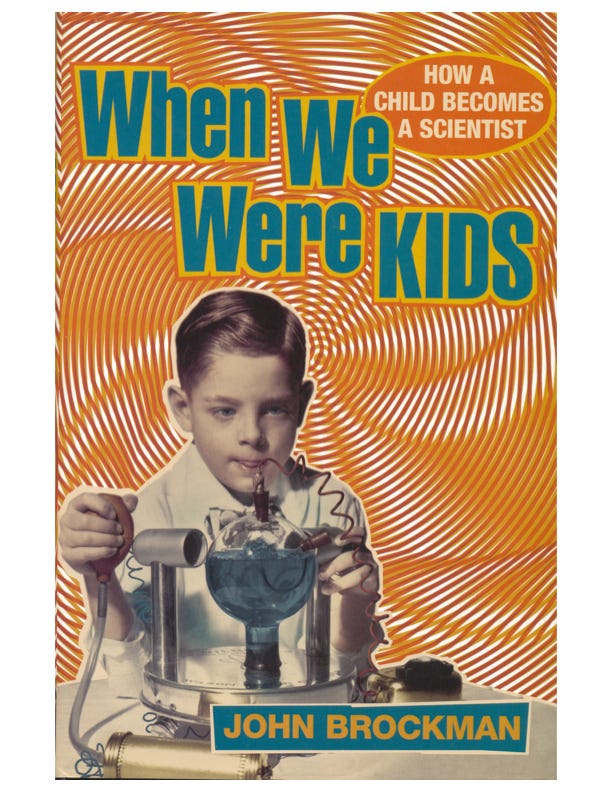
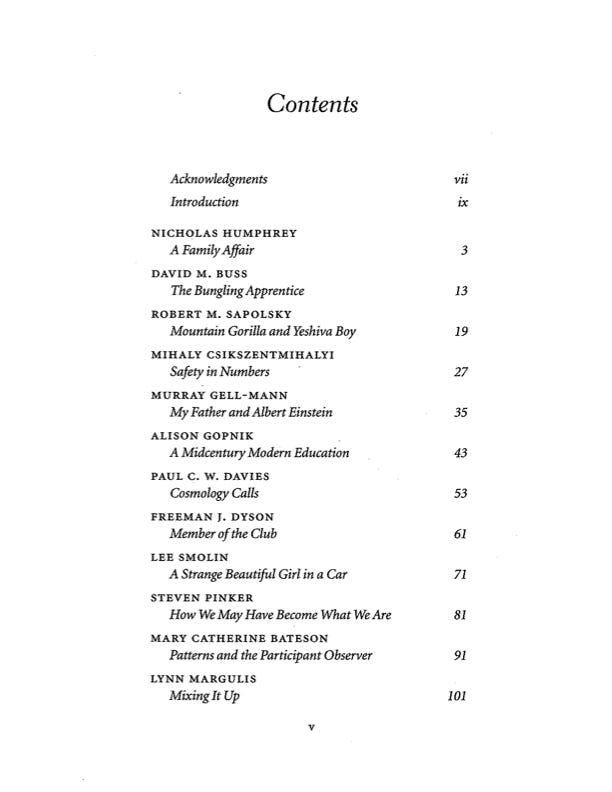
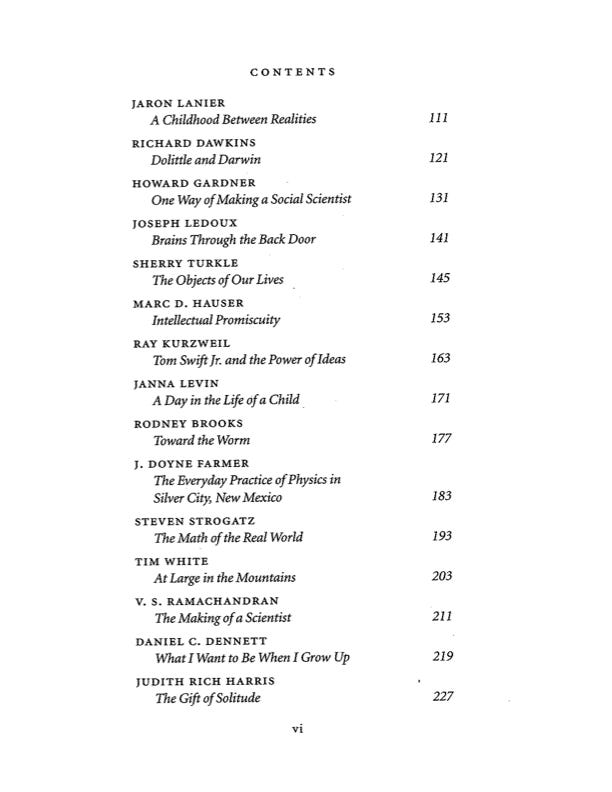
This piece originally appeared in a book edited and commissioned by John Brockman, the famed literary agent to the largest, most influential cohort of scientist authors. The book features a remarkable contributor list—Kurzweil, Dennett, Dawkins, Margulis, Dyson. I’ve included the Table of Contents at the close of this piece. The title, “When We Were Kids: How a Child Becomes a Scientists,” (retitled “Curious Minds” in the US) was also Brockman’s prompt: tell the story of how you became a scientist. Below is my contribution, first published in 2004. —Janna
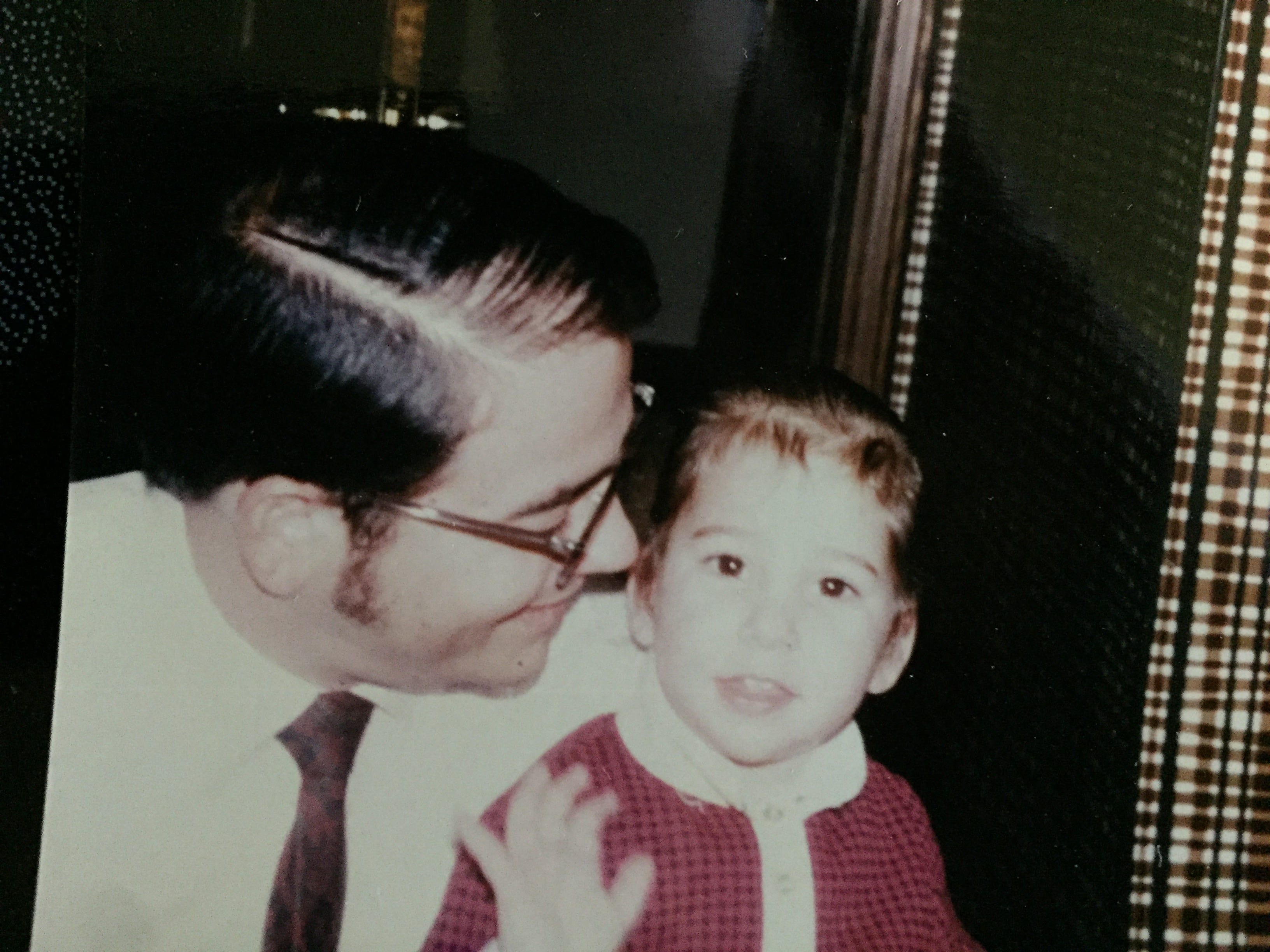
My dad had these enormous medical reference books. After he left for work in his green Volvo to drive through rush-hour traffic into Chicago, I'd spend time in his office, in his brown leather arm chair with the matching ottoman and the wall of enormous books. I could barely lift them; they filled my whole arms, fingers spread wide on either side of the solid clothbound covers—maroon, dark blue, beige. Ugly colors, which impressed me. Such an insistently drab exterior signified something, lent gravity to the contents. That was as much as I could glean from those books. Inside were hieroglyphs. I tried to read the entries—Pancreatic Adenocarcinoma, Cerebellar Vermis Hypoplasia, Myeloid Myelodysplastic Syndromes—but never understood a significant word. I was jealous that someone else could access the ideas and knowledge trapped in the Latin inscriptions. Now I think they should have been better written. And more attractive.
I knew that those drab, heavy books were somehow connected to a real place, a hospital. I went there with my dad to witness open-heart surgery once. I stood close enough to touch the kid, a burly ten year old, when they leveraged his ribs to crack open the chest cavity and expose his heart. My dad watched me watching and wondered if maybe this wasn't such a good idea. The surgeon glanced down my way a couple of times—I was just a pair of enormous, shocked eyes between green paper hat and green paper mask—and asked whether I might faint. But I wasn't even close to fainting. I was able to detach myself. It was a toughness that faded with age, along with any impulse to become a doctor. But that was an extraordinary day; on an ordinary day, I would sit in my dad's armchair and pretend to read his books.
(Parenthetical aside: My sister Stacey also remembers her tour to the operating room to observe pediatric open-heart surgery. She recalls taking a break from the procedure, which takes several hours, to go across the street and eat a bowl of chili. She became a veterinary surgeon. My sister Leslie, the lawyer, negotiated her excused absence.)
After reciting encyclopedic entries from the Physicians' Desk Reference, I would rummage through the music selection in my dad's study, which was also home to the family record player and stereo equipment. We had a collection of 8-track tapes, huge plastic boxes. They were real machine parts, delivering a satisfying kick when properly locked into the tape player. I'd have to put some weight into pushing the 8-tracks into place. I could sit there for hours listening to Willie Nelson and Rod Stewart, or if I got my hands on my sisters' collections, maybe the Beatles or Queen. But I never became a musician. Or a sound engineer. Or a medical doctor.
My dad's study was a small brown room off a bigger, browner room—the family room. Brown and yellow. There were wood floors and wood paneling. It was the 1970s. And black-and-yellow plaid couches—two plaid couches facing each other. By late morning I'd be sitting between the couches, on the brown rug, as if in a sandwich with giant plaid bread. I'd sit there and watch TV. Hours and hours of TV. I watched reruns of Star Trek. Captain Kirk would stagger around those chintzy sets, leading with his chest, throwing his chest left and right, his feet following that chest choppily, all barrel-chested, arms bent, fists clenched away from that yellow-clad chest. I loved that show. It was so optimistic.
We had flown to the moon! To the moon, can you imagine? The pride, the humility! Suddenly the colossal expanse of the solar system, the intimidating, humongous cosmos, assumed a new significance, and the old significance sped through the social order, from religious mythology past astrology, through science, to real, clunking exploration. We were the new pioneers, pushing off the new coast. We looked again at the plane of planetary orbits and saw our cosmic backyard—a reachable, traversable, knowable backyard. If the solar system was manageable, maybe so was the galaxy, or the whole universe. Our eyes glinted with megalomaniacal madness. All of it could be ours to explore and who knew what was out there? It was science fiction, but it was reality, too.
I watched TV all the daylong if it wasn't a school day. Dr Who. The Land of the Lost. 2001: A Space Odyssey. Cosmos. We were a new generation. I sat there, a child from a childish country, wide eyed and absorbent. Knees crossed on the brown floor in the brown room, face illuminated by that artificial flickering light, I soaked the images in through my pupils and pores.
But I also watched old Laurel and Hardy and Abbott and Costello movies and Bewitched and I Dream of Jeannie and lots of sitcoms about housewives. Jeannie wanted to marry an astronaut she called Master. I fantasized about becoming an astronaut. I grew up in love with space and the cosmos, but not with a man called Master.

In the late afternoons, I'd go with my mom to shop for groceries. I was like luggage and would be placed along with her hand bag on the orange plastic seat on the front of the shopping cart, legs fitting between metal shelf and handrail. The grocery store was huge and suburban. I don't remember the name of the chain. Maybe it was a Piggly Wiggly or a Safeway. Racks of fluorescent tubes aligned with the aisles, so that the place was bleached with photons. Sometimes, I'd walk alongside the shopping cart paying special attention to the nearness of the slick, shiny linoleum floors—a mysterious, modern material. We would walk slowly and conscientiously down the corridors of food, of cardboard boxes, and seductive packaging. It was a waltz. The Piggly Wiggly waltz. As the Muzak urged us on, we'd pack the groceries into paper bags—distinctlyAmerican, big, stiff, brown paper bags. This was pop art, consumerism, pure Warhol waiting for me to discover him.
But I never did learn any practical skills there. I can come back from a hangar-sized grocery store with oddly mismatched, over priced sundries that refuse to merge into a meal. I learned instead about Warhol and his America. A decade later, in New York, I would stand beneath giant painted cans of Campbell's soup feeling happy with the familiarity of the image. Thinking I never much cared for the chicken variety, thinking about massive suburban grocery stores and brown paper grocery bags, thinking about red and the excellence of the label and the stupidity of our consumerism.
Then there was Carl Sagan. After Dad came home, the family would sit around the kitchen table and talk—but not about the hospital or the kids in intensive care. We'd talk about things at random. If the conversation needed flint, there was always Carl Sagan. My whole family used to laugh to the point of derangement at my impersonation of him in Cosmos, ogling the animated sky with openmouthed wonder and reveling in the magnificence of the sound of the phrase "billions and billions" and the awesome significance the words conoted. My imitation was sheer flattery; we all thought he was great.
I read his book The Dragons of Eden and wrote essays for school on evolution—essays with elaborately decorated covers in careful, childish font and light pencil portraits of Australopithecus. A child's scrawl and careful prose, one clean, basic sentence steadily following another, which, come to think of it now, is a better way to write than the way I wrote as a degree-confirmed scientist with a concentration in philosophy. I had to unlearn those polysyllabicisms. My early essays on evolution and astronomy became mementos of a little girl I couldn't remember, mementos I hoped would explain how I got here from there. They never did. I carted those reminders around with me in unopened boxes until my postdoc at the Center for Particle Astrophysics in Berkeley, when, in impulsive frustration, packing for yet another academic move, I emptied them into a recycling bin on Haight Street.
In the evenings, my mother would read books, so many books. She'd settle on the couch and stretch her toes away from the back of the novel. If she finished a book, she managed to find a place for it on already full shelves. One day, nosing around, I saw that they were stacked three or four deep: Toni Morrison, Philip Roth, Joyce Carol Oates. It would be many years before I would succumb to such capacious reading, an avarice on the verge of addiction, including compulsive spending in bookshops and hoarding of books to ensure that the supply never diminished. Books in drawers, under the bed, in boxes under the stairs. Books high and low and for sheer pleasure. Lust almost. Many, many years later, I would write a book. The intimacy of those books would migrate from memory to influence to experience, until they were digested and stored in my fibers, an integrated part of who l am.
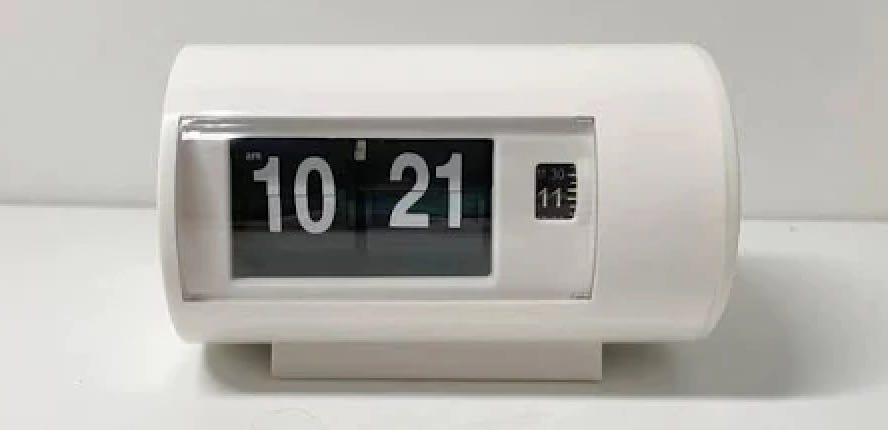
At night I would stay up late, drawing pictures in my room, sprawled out on carpeting so ugly my mother wept after it was installed. It was an irregular pattern of shag and short fibers in candy-colored pink, blue, red, and white. Deep into the hours when it was dark and quiet, I'd lie in bed and watch the clock, a bulbous white plastic brick with numbers painted on black plastic cards. When the minutes changed, a card with the next number would flip down. I watched the time change and played combinatorial games with the numbers, isolating primes, finding divisible integers, cataloging rational combinations. Nothing too impressive. Nothing that would match the stuff of legend, like the story of the great mathematician Carl Friedrich Gauss, who as a school boy was given the assignment, along with his classmates, of adding all the numbers from 1 to 100 and produced the answer within a few minutes by noticing that 1+100=101 and 2+99=101 and 3+98=101 and so on until you get to 50+51=101, so the sum was 101 X 50=5050, while everyone else was plodding along with 1 + 2 + 3 + 4....
I'd sit up at the foot of my bed to look out the window onto the backyard. I'd listen to the neighborhood. Far off, I would hear cars or trucks moving along, and there were insects worth listening to, all of it providing a soundtrack to my late-night solitude. I'd stare at the patch of sky wedged between the trees arching over the neighbor's manicured lawn. I'd wonder how far I was seeing, how deep into space.
And day after day things like this would happen, and at the end of thousands of those days I would be conferred with degrees and jobs and titles and I'd be a scientist. These are the threads I remember, the things I think I know. How is it that these experiences colluded to make me a scientist and not a musician or engineer or doctor or housewife? I have no idea.
But I know I would swell with a feeling like ecstasy at the thought of our pretty, blue planet spinning tamely in a sea of blackness in a cosmos magnificent and huge. There was nothing I could think of that was more important than this, as I looked out that white wood-framed window—a white wood-framed piece of the universe, as important, as momentous, as insignificant as any other. I wanted to see farther. I wanted to fly out the window through the trees, into the thick color of the sky, and merge with whatever I found there. Night after night. Steaming the window pane, my face was so close. I wanted to see more, to know more, to be more.
When the frustrations of science wear me down; when I can't bear to write another grant application, do another detailed calculation, listen to another seminar, read another article whose title alone is impenetrable, I sometimes wish I had chosen some other direction. I've looked back and wondered how I got here from there. But then after time it always comes around again: I'm still that kid sitting alone in the middle of the night, thrilled just to look through the window at my piece of the universe, wondering what else is out there.
My details are different, but I grew up in the same era, and in the same country, with a lot of the same cultural backdrop you describe. So it's curiously familiar in some ways. But no open heart surgery...and a lot more memories around a certain movie that captured my childhood imagination along with Carl Sagan that some have heard of, Star Wars.
Now I know why you wanted that photo