
Death by Space Debris

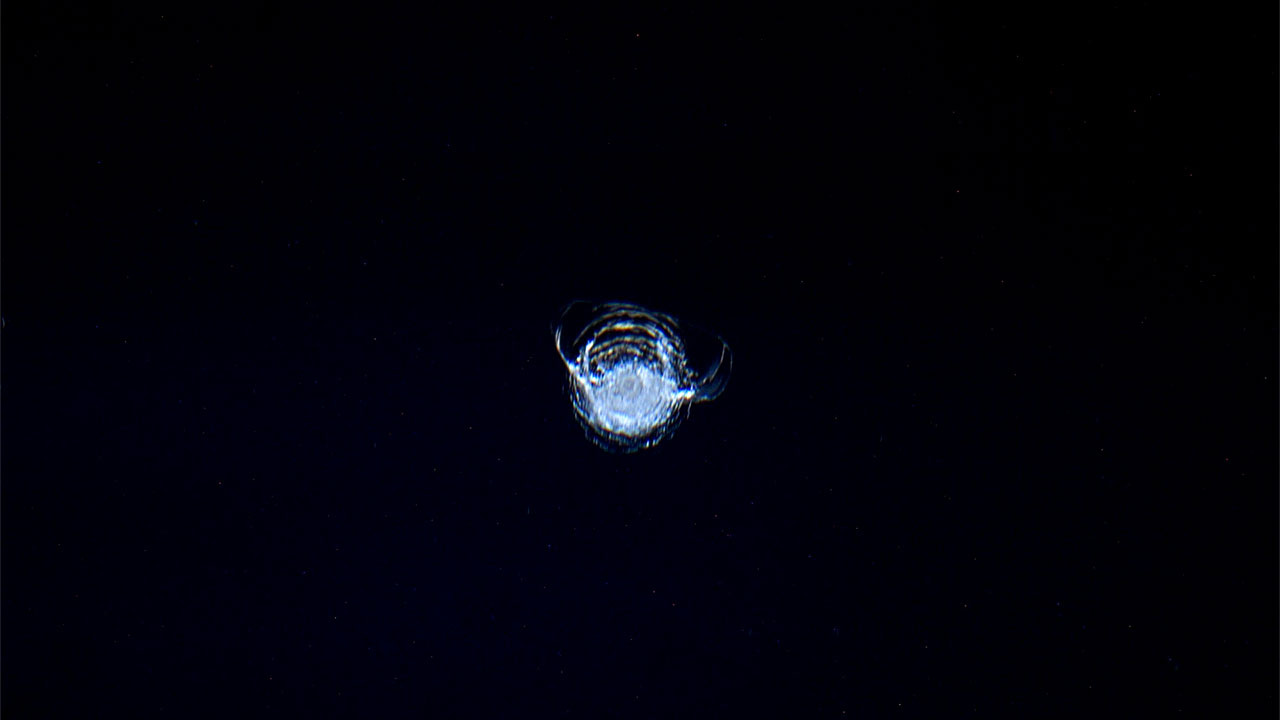
Many years ago, my dear friend James Gleick (author of “Chaos,” “Genius,” and “The Information”) rang me up with a tentative invitation to the fabulous Key West Literary Seminar. “Are you writing any speculative fiction,” he asked. To which I replied, “Well, I am now.” In a frenzy, I wrote several chapters of a novel to nervously read from the stage at the San Carlos Institute in Key West. This was 2012 and the novel remains unfinished. The premise, I kid you not: a pandemic that originates in animals and crosses the species barrier in a wet market in Africa. If only I had finished the book. I had 8 years to seem spectacularly prescient. As I’m presently writing you from a very quaint porch in Key West, having just attended the Key West Literary Seminar, I am reminded of this unfinished book. I share chapter one with you today, as told by the male protagonist. I don’t yet know if the title “Death by Space Debris” belongs to the book or just to the chapter. Thanks for joining me here in the ether. — Janna
Chapter 1
I work for a man named Dr. D’Eath. I am not making this up. He introduces himself as “Deeth, rhymes with teeth,” but frankly its death rhymes with breath. His phonetic revisionism is the only evidence of a conscience, the closest he’s ever come to an apology.
D’Eath’s company is VIAG, the infamous VIAG. Nobody gets the acronym right, so for the record VIAG=Viral Infections Around the Globe.
When he hired me, D’Eath gave me his humanitarian pitch:
“We spend too much time focused on diseases that have adapted to humans when we should be intercepting them at the animal base. The vast majority of pandemics are zoonotic and mutate until transmissible to humans. We can stop contagion before this happens. We can forecast the outbreak of diseases decades earlier if we stop waiting politely for a blight against the human species.”
He gave the impression of ambling, but with such a tremendous stride that I had to sort of skip a couple of times to keep up. It was emasculating. I still can’t determine if D’Eath is a genius of social manipulation or if his practices are entirely adaptive and innate. His affable smile heedless of the exertion, I appreciated – as I’m sure I was expected to – his demonstration that transporting his immensity was no challenge, such was his mental and muscular brawn. His body a prodigious yet elegant mechanism of organic hoists and pulleys. So reliable. So advanced.
“We listen to the viral chatter in countries where contact with wild animals, is more, ah, more…unavoidable. The hunters of bush meat in central Africa, like the merchants in wet markets in Asia, helpfully collect blood samples, dripping blood right from a severed neck onto the filter paper we provide. Wild pigs, snakes, monkeys, rodents. The people simply need food. Isn’t it remarkable? They need food.” He said this as though appreciating the unfairness of his girth for the first time, as though he just realized nature’s blatant favoritism toward him. He drummed his thick side as he spoke, for this one moment sharing in my amazement of his great mass. “I’m so big,” the gesture implied. How is it possible others are hungry?
That was four years ago. I suspect I only heard half the recruitment speech when I accepted the job. I wonder if anyone has ever held out for the entire argument. Honestly, it might sound defensive, but I’m immune to D’Eath’s charms. I took the job because my wife wanted me to work for VIAG too. She thought of it as a small country and felt I should share the protection of a VIAG passport. I hadn’t ambition for power or wealth. Power and wealth weren’t exactly offered either. It just happened that way. Honestly, I am particularly skilled at what I do. I was made for this job.
I’m responsible for the warning transmissions VIAG broadcasts daily. My warnings are pretty prosaic really. It’s easy to think of ways people might die from nature’s adversarial outlook on us. I’m by far the best in my field although I run a small team of lesser talents, some clichéd conspiracy theorists or adolescent hackers that can crunch the numbers proficiently. I keep a small notebook to record new scenarios as I discover them. I never distort the facts. I report the statistics exactly as I calculate them. The probability of a person dying from toxic plastics last Monday was 1 in a million, a 1 in a billion chance of a torn cerebral membrane from a cluster of errant nanoparticles on Tuesday, a 1 in 10^122 chance that cosmological vacuum energy will drive a rampant and sudden heat death of the universe on Wednesday, a 1 in 10^75 chance that a nearby gamma-ray burst will burn a hole through the ozone layer allowing a direct flare of solar wind to set someone on fire on Thursday. If I’m drunk or uninspired or depressed, there’s always weather. Honestly, people like death by weather the best. It seems so plausible, so familiar. No matter how slim the odds, people enjoy a brief spasm of panic.
Dr. D’Eath doesn’t terrify people exactly. He dominates them. They become mesmerized by him, obsessed with him, in love with him. He’s more handsome on film or in a photo than in person. In person he’s physically truly impressive but so inordinately broad and bulky as to be a marvel of natural selection. And still his head looks big in relation to that hulking frame, his hair luxuriously silver and curly and fluffy. I predict he’s got another strong ten years before the fat of his face fully falls into the bowl of his beard. His hand swallows yours in a handshake that seems to take pity on its target, grasping and shaking at a fraction of its full capacity. Part of his economic power is no doubt attributable to this physical deformity, this gargantuan overgrowth, so that any corporate opponent instantly feels diminished in comparison, especially those not forewarned of his record-breaking proportions. It’s hard not to relinquish authority to someone so privileged with such volume. He looks more human through the filter of a camera, which captures a sexual appeal less obvious in the flesh.
I’m three inches shy of looking him in the eye, which measures me to be much taller than average. But I’d bend a scale by a mere third of what D’Eath could. The day I met him he strode towards me at such an aggressive pace I stepped out of the way, then baldly scanned the full range of his shoulders from left to right. It would have been a permanent entry in my vault of embarrassing moments if he hadn’t given me that unintended gift, a surge of confidence when he said, “I’m Dr. Deeth.” Deeth! There was the potential for shame, pretense, maybe even self-consciousness.
The concept of a Doomsday Division was D’Eath’s stroke of genius, but similar branches of other companies have cropped up over the years, although my unit is the only one with national attention. The cable news networks telly-type the VIAG transmission across the bottom of the screen several times a day, like the stocks or emergency reporting systems. Imitation divisions falsify their statistics, report higher likelihoods than calculated. Their mistake is to think this will cause broader panic, hence boost their professional profile, but it’s an abysmal device. For one, most people don’t care to understand the mathematical significance of the data, and for two, they intuit the lack of drama in an over-inflated statistic, death by common cause, death by car crash or cancer. That’s why I always report precise mathematical computation. It’s more dramatic.
It’s rare but it’s happened. People have actually died in precisely the way I forecast on precisely the day I forecast it. Naturally, this has inspired several varieties of cult based on my statistics, although that’s self-regulating since these particular cults have a tendency towards mass suicide. I don’t feel particularly guilty about this, although I gather I should because people always ask me, “Doesn’t that make you feel guilty?”
My transmissions induce a combination of anxiety, fear, and by the end of most days, relief. The cocktail does create a particularly human pleasure, a surge of dopamine deep in the brain that simulates a turbulent love or sexual ecstasy. So that even people of competent reasoning ability occasionally give over to the game, much like they might occasionally play the lottery.
Today was the day my mother-in-law informed me my son was failing the third grade. I didn’t even know that was possible. Given the unethically high tuition, I would have imagined private school teachers could educate my son. I’m not a complete genetic determinist but what are the chances he’s uneducable? My wife is even smarter than I am, not that I’m presenting myself as the gold standard.
I’m getting home later than I intended. I was hoping to get home before Gideon fell asleep. I wonder if I should even go in, I hesitate at the door but my keys chime against the metal knob and that’s enough to alert Gideon’s canine-like hearing. His muffled voice is audible through the heavy door.
“Dad? If you float in space, why don’t you float in the city?”
He calls this out maybe five times before I make it into his room and sit beside him on his bed.
“Dad? If you float in space, why don’t you float in the city?” Each time he asks it’s with the enthusiasm of the first, searching my face for an ardor that matches his.
“You do float. Until you hit the ground.”
“What are your eyebrows for?”
“To keep dust out of your eyes.”
“No, that’s not it. I know! They’re to show you’re angry or happy.”
We stare at each other moving our eyebrows up and down. He’s made me smile involuntarily. Like catching someone else’s yawn.
“Why are you my dad?”
Because you have my genes.”
“Will you come back soon?”
“I live here.”
“You do? I never see you.”
“You’re seeing me now.” Gideon sits on top of the covers and looks me over.
“How long does now last? Is now a long time?”
“I guess now lasts forever.”
“Will you sit here on my bed forever?”
“No, I’m here this now but I won’t be here later when it’s now.”
“Is this now gone when it’s now later? Or is it still there somewhere, like…” he looks around before deciding, “over here maybe?” He keeps trying to whip around to catch sight of something behind him.
“Maybe. But that’s a point in space,” I indicated behind him, “not a point in time. It’s a point in space that moves in time.”
“Why can’t we see the old now anymore?”
“Because the light from the old now has already moved past us. We can only see the light from the old now if we look at something far away.”
“You can’t do nothing! You can’t sit there and do nothing because you’re sitting there. It’s like you’re always moving even if you sit still.”
“Well, yes, you are always moving in time even if you sit still.”
Gideon sits as still as possible but exaggerates his breathing and widens his eyes. I watch him. His cheekbones already prominent and his eyes both round and slightly lifted at the outer corners. At 8 people still mistake him for a girl with his long un-brushed hair and abundant, chapped lips. I notice his nails are ragged and filthy.
“Grandma tells me you’re not very happy at school.”
“I hate it. I’m stupid. I’m the stupidest kid in the class. I get in trouble all the time.”
“Did you get in trouble today?”
“Yes. I tried to tell Ms. Damio! My brain was farting out ideas.” He starts playing with his sleeve. Gripping it with his fingers, twisting the fabric and untwisting. Then suddenly prying the shirt off and shimmying under the covers. His body is so slight, like a much younger child, but detailed with fibrous muscle like an older kid.
“Do you love me dad?”
“So much.”
“What does that feel like?”
I can see the most tender part of the boy’s eyes, wet and reflective and pink.
“It hurts a little bit.”
“I think you love me a little bit more than I love you.”
“That’s okay.”
I rake his long hair with my fingers. Feeling for coarse knots near the back. He tries to untangle my nails and push them away. Then turning to me suddenly as though amazed or terrified:
“Is it now in space too?”
“It depends on whom you ask.”
“Is there someone in space we can ask?”
“Maybe. I don’t know.”
He seems to forget about me for a minute and pinches the rubbery thumb pad in his right palm. I see it’s thickly calloused and wonder how long this habitual thumb-pad pinching has been going on. I’m not sure it’s my place to tell him to stop. He notices me again, slaps those wide eyes on mine, still pinching and crushing. “Was there a time before trees?”
“Yes, there was.”
“I only ever see grandma. If you live here why don’t I see you?”
“I work late. So I sleep at work most of the time.”
Do you come home and brush your teeth while I’m at school?”
“No. I have a toothbrush at work.”
He considers this. He picks up one of the action figures scattered among the ruins of his bed and gets it poised, punching the air and making crushing sounds. He’s into vigilantism. It’s the most normal thing about him, his boyish devotion to superheroes, to loners and misfits, to a simple righteousness that will later seem ambivalent.
“Why do I live with grandma?”
“I was raised by my grandmother you know. It wasn’t so bad.”
“That’s because your parents were dead. When I grow up will you be dead?”
“It’s possible.”
“Grandma says you scare people.”
“I just tell people the truth and they like to be scared by it.”
“Grandma says your transmission today was for a 1 in a million chance that someone would be struck by space debris.”
“Yes, that’s about right.”
“Why aren’t you scared?”
“Because I understand probabilities.”
“Why is grandma scared?”
“Because she doesn’t understand probabilities.”
“Grandma says your parents were killed by space debris.”
“Yes.”
“Stuff just fell out of the sky?”
“Yes.”
“And it was sharp?”
“Yes.”
“Where’s my mom?”
“I don’t know.”
“Is she dead?”
“I don’t know.”
“I hope she knows about the space debris.”
“Me too.”
Gideon closes his eyes.
I don’t usually do space debris for obvious reason. But given the accumulation of orbital junk in the most highly trafficked satellite belt, it was hard to ignore today. Last night a spacecraft was torn apart by what is rumored to have been an old-fashioned dime traveling unimpeded at relativistic speeds and I would have looked incompetent if I didn’t issue a space debris warning. How a dime got into the satellite belt remains unexplained. Facile theories abound.
The night my father was killed by a piece of NASA forged metal, recast in the shape of a tribal spearhead that fell from the sky, was also my mother’s last night working for NASA mission control. She knew that the spent rocket stage from an unheralded test mission was likely to fragment into pieces too small to melt when they hit the upper atmosphere allowing them to plunge to Earth, sharpened and molded by re-entry. She computed the chance of a piece of debris from the rocket killing a person to be 1 to 3200. A 1 in 3200 chance of killing one of the then 7 billion people on the Earth. That means a 1 in nearly 22 trillion chance of a person being killed that was the specific person that was my dad. She called my father to tell him to stay inside and away from the windows. Mission control hadn’t identified the location of re-entry, but gambled that it would be some time that night, and my father, delighted by my mother’s lingering superstition that survived her mathematics degree, went outside to lie in their 3 meter by 3 meter garden hoping against odds for a light show from incendiary space junk. As he exhaled a sigh of relaxation and lay his head in the grass that perfect shard pierced the soft pucker at the base of his throat. When my mother found him dead in the garden two hours later, her shrieks startled some birds in a tree, their frantic retreat dislodged a twin spearhead, which then pierced the thin avenue along her long jugular. The odds of that happening, were 10-trillion squared. Arguably, the most unlikely pair of deaths on record.
In the twentieth century, there were twin brothers who were both killed by a taxi driver but one year apart yet on the same street by the same taxi driver carrying the same passenger. That’s unlikely but nowhere near the improbability of my parents’ demise. Don’t try to connect the dots between my personal tragedy and my profession. It’s too easy. Doesn’t even deserve to be said aloud. So no one ever has. No one ever gives more than a pendulous nod and shake of the head, body language for “wow,” followed by another “wow” of a darker texture.
I wish I could keep Gideon awake. Talk to him some more. Observe him and compile mental notes, data about his mannerisms, his fantasy life, his character. Gather evidence about who he is. I’ll answer any question he asks me. I’ll tell him anything he wants to know.
I just read this and I'd like to read more. You should finish it.
So that's another story - but I sat next to this guy, who turned out to be, James Gleick on a Metro North train in late 1980's and we started talking and he said he had just written or was writing his book Chaos around 1987 and I asked him how he dealt with Kurt Gödel’s theories of Incompleteness which I paraphrase as "you can't prove anything consistent or inconsistent unto itself!" to which Gleick, if I recall correctly "didn't have an answer and hadn't included that in his book - plus he was somewhat surprised as I was to ask that question which had bothered me since my experimental math teacher at Brooklyn college , back in the day, talked about Kurt Gödel’s theories and Chaos theories and his experience of being a spectator on LSD before it was illegal
And coincidentally little did I know until now, that Gleick's in his 1987 book "Chaos: Making a New Science" highlights my working in progress documentary subject a "Conversation with Benoit Mandelbrot in a Snow Storm" in 2003 -
Gleick highlights Mandelbrot's work on self-similar patterns in nature, and his introduction of the term “fractal” too hmmm - my audio excerpted from video is available
But I digress on your Dr Death reference which coincidentally talking about Chaos! It reminded me of my Myth-Illogical story "When Death Went On Strike!" Talking about Chaos
Anyway some food for thought