
Posthumans in Space
A Rumination...

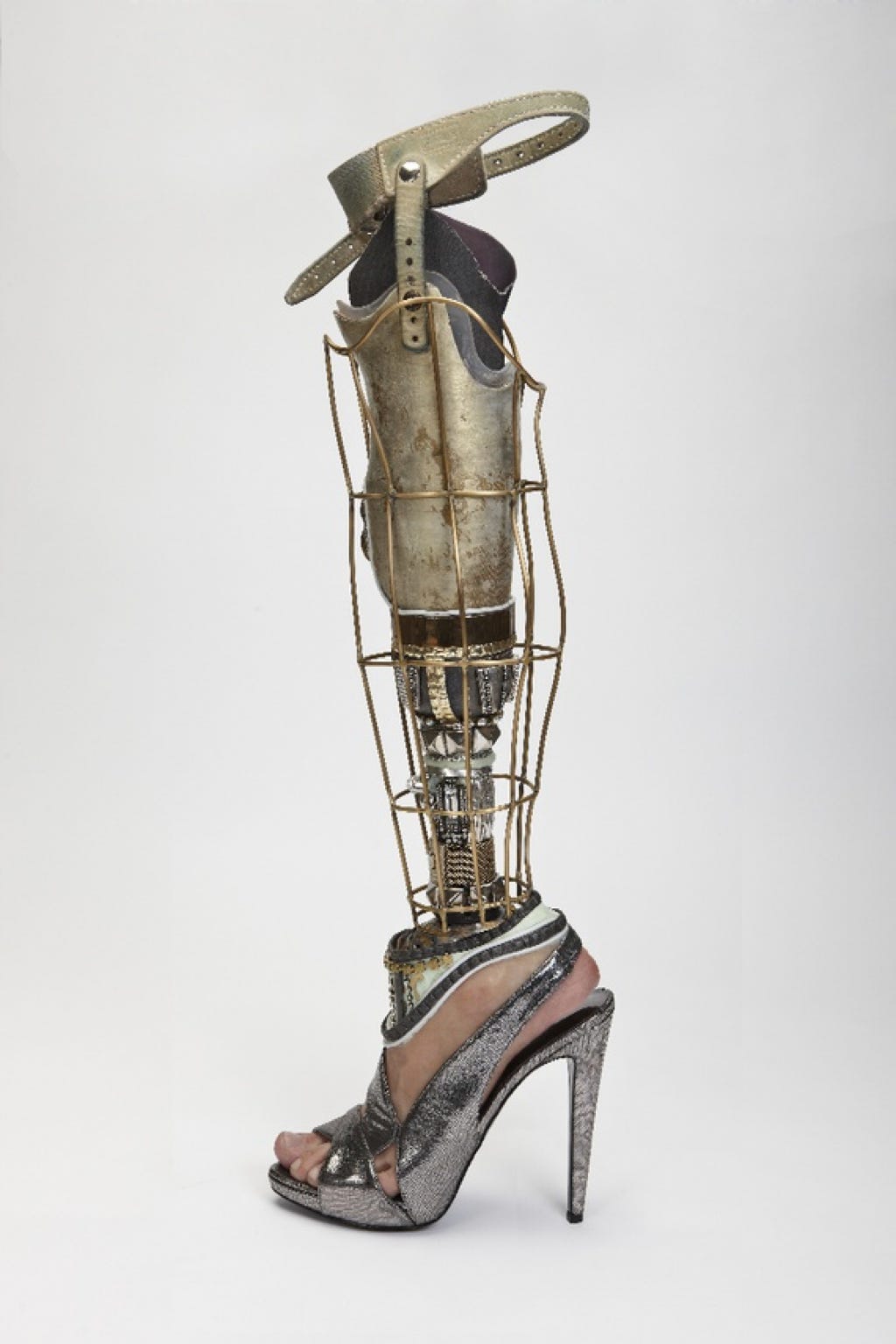
In a recent Rumination: Depose the Gods; Install the Machines, I wondered if we weren’t launching supranatural oracles into the sky because the urge to invest a numinous power above us is irrepressible. We’ve deposed very nearly all the gods from the proverbial heavens—Zeus, Jupiter, Nut, Indra, Thor, the usual suspects. There is one guy in particular who stubbornly lingers up there, but for the most part, the gods of the constellations are exiled. In that spiritual void, we intend to install a pantheon of machine intelligences thinking in space, executing compute, sending data packets to a Dyson swarm of satellites—actual sovereign overlords.

While the machine gods reign in low Earth orbit, is it our intention to stay down here and genuflect? It’s thrilling to send people to space. With admirable confidence the Artemis II astronauts catapulted beyond Earth’s biosphere for the first time since the Apollo era to much cheering and fanfare. Meanwhile, back on Mars, the Perseverance rover is climbing the western rim of the Jezero Crater, and only a few enthusiasts, many in a NASA control room, are glued to their screens to bear witness. Ratings suggest that people like the idea of humans in space. But do we really, honestly, intend a sustained human presence on the Moon and Mars?
To pioneer the Moon and Mars, it’s pretty disadvantageous to enlist humans. Humans are beleaguered by the realities of space. We are so perfectly designed for this planet and this biosphere, as only natural selection could tune so delicately. The further behind we leave the biophilic capsule of the Earth’s influence, the more hostile the circumstances obviously. Outside of the Earth’s magnetic field, human cells suffer genetic damage from raw solar winds and cosmic rays. On the Moon, astronauts are continually pelted by meteors and require suits inspired by bullet-proof materials. On Mars, mortally toxic chemicals saturate the regolith and the winds. Beyond a fleeting exploratory and triumphant visit, the conditions on these celestial bodies will be miserable. Then lethal.
At this chaotic intersection of space exploration and AI technology is transhumanism, the belief that humans can and should transform beyond the limitations set by evolutionary biology. Transhumanists, in my experience, used to be fun, science-fiction loving futurists who dressed eccentrically with visible body augmentation and the occasional implantation. But now the ideology seems all rather more serious with transhumanism a brief phase in a technologically driven evolution to a posthuman species as divergent from us as we are from Cro-Magnon. I want to say Posthumanous, posthumous to humans.
Many belief systems converge in this post-trans-humanism, this aspiration to transform beyond our current bodily and cognitive limitations. In a recent New York Times interview, a famed tech billionaire (let’s call him Peter) was asked if humanity should endure. He paused. It was a very, very long pause. Then what followed was the concession that humanity should endure, just not necessarily in its present form. Transformation is the catalyst we require to save us from stagnation, is the belief. In his interpretation of his Christian faith, transformation beyond our human restraints is a holy aspiration, one that will save us from the grips of the antichrist. If you think I’m being hyperbolic, the interview was published under the headline Peter Thiel and the Antichrist.
Let’s not fuel conspiracy theories. There is not an organized religion of the techno-capitalists, a uniform adherence to a secret set of doctrines, but there is a cultural trend, a leaning, a refocusing beyond humanity. There are others in the AI campaign, not necessarily Christians, who believe we should not mourn the extinction of the human race any more than we mourn the evolutionary progress that decommissioned the Neanderthals. Of course there are true humanists in Silicon Valley too—the vast majority of the AI adherents presumably—who do believe this campaign for conscious AI in space is for the benefit of humanity.
Regardless, I myself am not a luddite. I’m not afraid of change. I’m unphazed by LLMs. I’m not scared of AGI, though I also recognize, by reason, maybe I should be. I’m thrilled by space exploration. I’m just asking those who have seized that portal, whom they intend to send and why.
Technology sometimes gets away from us, there are power struggles and set backs. But by many measures humanity does progress, though it takes some imagining to render the future. The firmament—humanity’s oldest instrument, a great commons looming above terra firma, bequeathed by astronomy to all on this Earth—may belong to the machines. The Moon and Mars likely will be inhabited by our posthuman descendants. And maybe in that territorial concession will be our good fortune. The Earth, this sanctuary, is left for us.
—Janna


Janna, On this topic I find Freeman Dyson's writings on the topic in "Imagined Worlds" and "Infinite in All Directions" a useful counterpoint to the narrower narrative which we've seen rising up recently. His was an open and imaginative vision that considered the possibility of the human tree branching and spreading to fill the new evolutionary niches that technology might make possible as we explored how to navigate the harsh environments beyond the protections of Earth's magnetic field and less dystopian. It came from the mind of someone who seemed to properly understand that evolution is not a hierarchy of dominance over the lesser, but a flowering of potential.
Here's something to think about: if Elon Musk et. all get their way with millions of satellites zipping around Earth at over 17,000 mph, we very well could be building the cage that keeps us and our machines trapped on Earth because launching to another world could essentially become a suicide mission.